
---
The biggest-slash-loudest conversation in AI right now is still about models.
Which LLM is smarter. Which one reasons better. Which one hallucinates less.
Admittedly, this debate makes total sense if you’re writing essays for your college class (you shouldn't be doing that), summarizing documents, or chatting your way through ideas.
It completely collapses the moment AI is asked to touch production systems.
Because in the enterprise, intelligence is not the limiting factor.
Context is.
Most teams evaluating AI start with a deceptively simple question:
"Well, which model should we use then?"
That question assumes the biggest risk is cognitive — whether the AI understands language well enough, reasons clearly enough, or produces the “right” answer.
But once AI moves from advising to acting, the risk window shifts entirely. to a new space.
Suddenly, the hard questions aren’t linguistic at all, they’re systemic:
None of that lives in the model.
It lives in the system. Your system.
Large language models are probabilistic by design. That’s their superpower. They can generalize. They can infer. They can reason across chasms of ambiguity and give you a great recipe for eggplant risotto.
Enterprise platforms — especially Salesforce — are built on the polar opposite premise... schema-bound, dependency-heavy, permissioned, versioned, and deeply, deeply unforgiving of “welp, it's mostly right.”
As it turns out, in probabilistic systems troves of unstructured data confuse the bot equally no matter how smart it is.
A Salesforce org is more like a living web of logic: flows calling flows, triggers invoking processes, fields feeding dashboards, managed packages enforcing constraints, and business definitions that only make sense if you’ve lived with them long enough.
An AI can be brilliant and still be blind to it all. Just like, ya know, a smart person in a totally dark room.
That’s why so many “AI agents” look impressive in demos — and positively terrifying in the damp darkness of production.
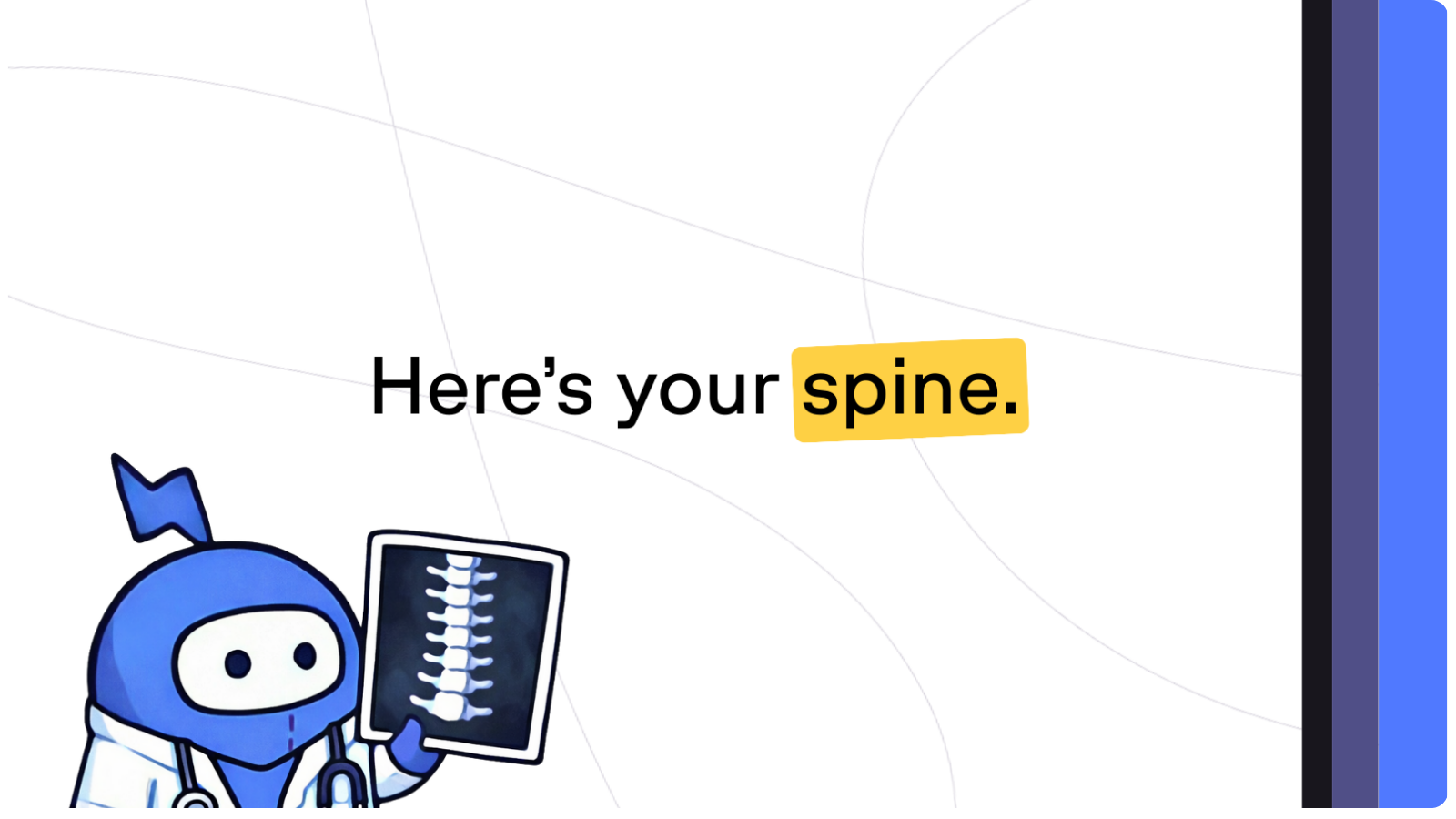
To operate safely inside enterprise systems, AI needs something most stacks still don’t provide: a deterministic spine.
This isn’t about better reasoning. It’s about certified, inspectable, system-native truth — the layer that can answer questions like:
Answer these metadata-level questions, and you have your structural understanding.
In Salesforce terms, it means CTA-level awareness of metadata dependencies, execution order, permission models, environment differences, and downstream impact surfaces.
Without that spine, an AI may sound confident — but it has absolutely no clue what it’s touching.
It’s tempting to believe the next model release solves the problem.
It won’t. No amount of language-level understanding can reliably infer:
Those things aren’t missing because the model isn’t smart enough. They’re missing because they’re not visible. Enterprise AI fails when it misunderstands consequences.
This is the architectural shift that actually matters in the next era of enterprise AI.
Not:
“Which LLM should we pick?”
But:
“What system context does our AI have — and how trustworthy is it?”
Stop thinking the future stack is model-first. It isn't. It’s context-first:
That’s how AI graduates from suggestion to execution — without blowing a hole in production.
If AI can operate safely inside a complex Salesforce org, it's safe to say it can operate anywhere in the enterprise. Salesforce concentrates everything enterprise AI struggles with:
It’s not a friendly environment for naive agents — exactly why it’s the right one.
Sweep supplies the spine.
With a sophisticated, deterministic, continuously updated layer of Salesforce context — built with the rigor of certified technical architects — that anchors AI actions in reality.
That’s what turns:
“I think this is safe”
into:
“We know why this is safe.”
In production systems, that difference is everything.
Copilots were the warm-up. Now, it's time to get out the popcorn. Agents are the main act.
But agents without deterministic context aren’t autonomous — they’re reckless.
The next era of enterprise AI will be won by those who understand the system well enough to change it.
And that starts with a spine.