Turn Salesforce complexity into operational clarity

As Salesforce scales, metadata complexity increases, dependencies multiply, and change risk increases.

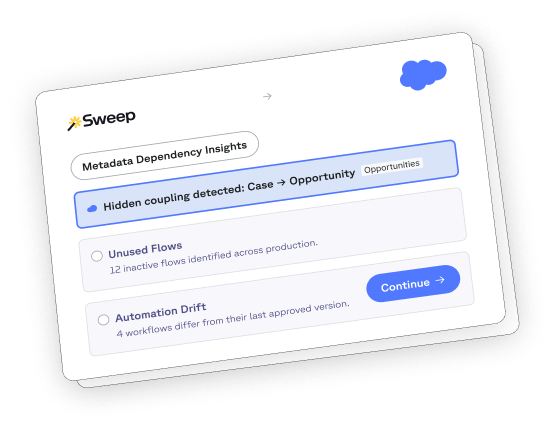
Sweep brings Salesforce into the Agentic Layer, indexing metadata, automation logic, dependencies, permissions, and cross-org structure.
Start free
5.0 on AppExchange
|
SOC2 compliant
|
Users Love Us
1

Built into Sweep’s Agentic Layer

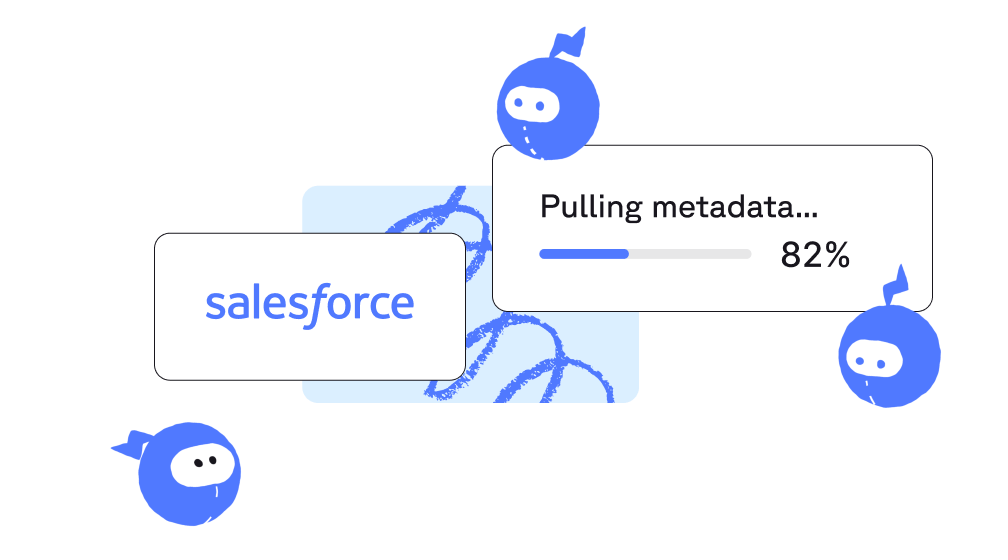
Sweep continuously indexes Salesforce metadata, enabling reasoning across schema, automation, code, permissions, and configuration. Sweep creates the metadata graph. The Agentic Layer reasons on top of it.

Metadata Agents & Impact Analysis

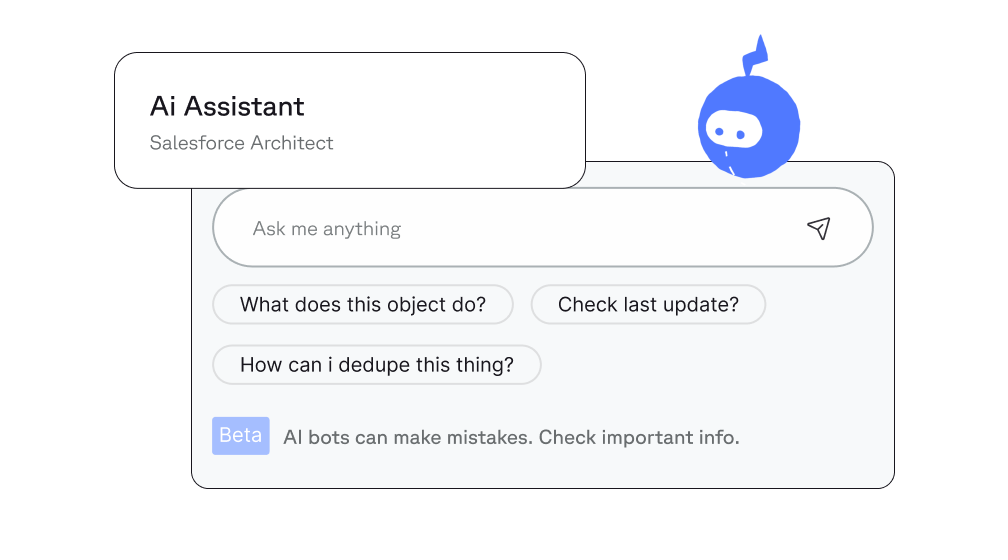
Ask natural-language questions about objects, fields, flows, Apex, validation rules, and permissions. Simulate change impact before deploying.

Automated Documentation & Dependency Mapping

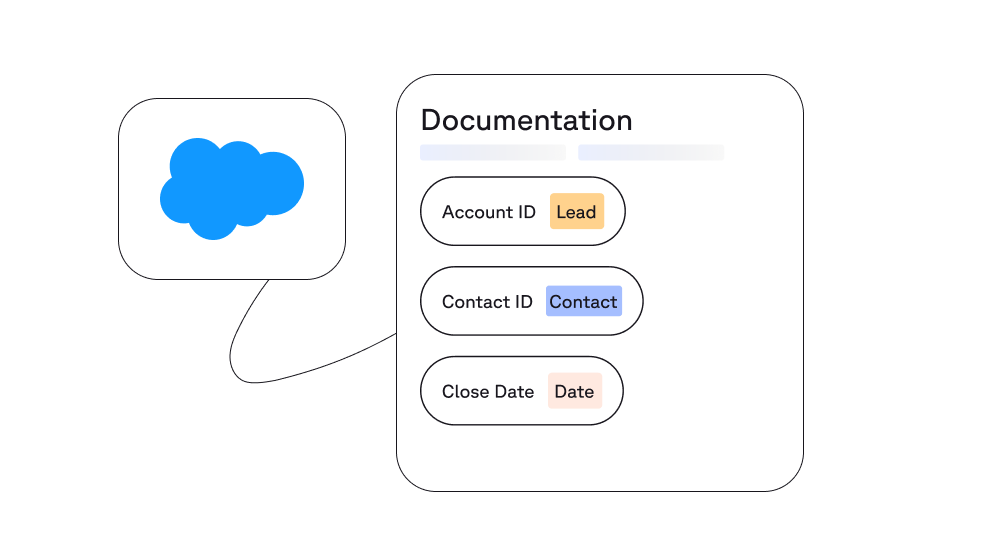
Generate always-current documentation and deterministic dependency graphs across objects, fields, flows, Apex classes, triggers, validation rules, managed packages, and more.

Visual Workspace

Visually explore Salesforce metadata, automation behavior, and cross-org dependencies in a shared, interactive workspace.

What you unlock with the Salesforce Platform
1

Understand your Salesforce architecture

Salesforce evolves through new features, automation layers, integrations, and org changes. Over time, logic fragments across Setup, Flow Builder, Apex, and tribal knowledge.

Sweep rebuilds that complexity into a unified system model so teams can see how schema, automation, and permissions relate.
1

Perform Salesforce impact analysis before deploying changes

Salesforce environments are tightly coupled. A change to a field, picklist value, flow condition, or Apex class can cascade into automation, integrations, reporting, or user experience.

Sweep exposes upstream and downstream dependencies before deployment. Teams can evaluate impact in advance, simulate change risk, and prevent unexpected breakage. Impact analysis becomes proactive instead of reactive.
1

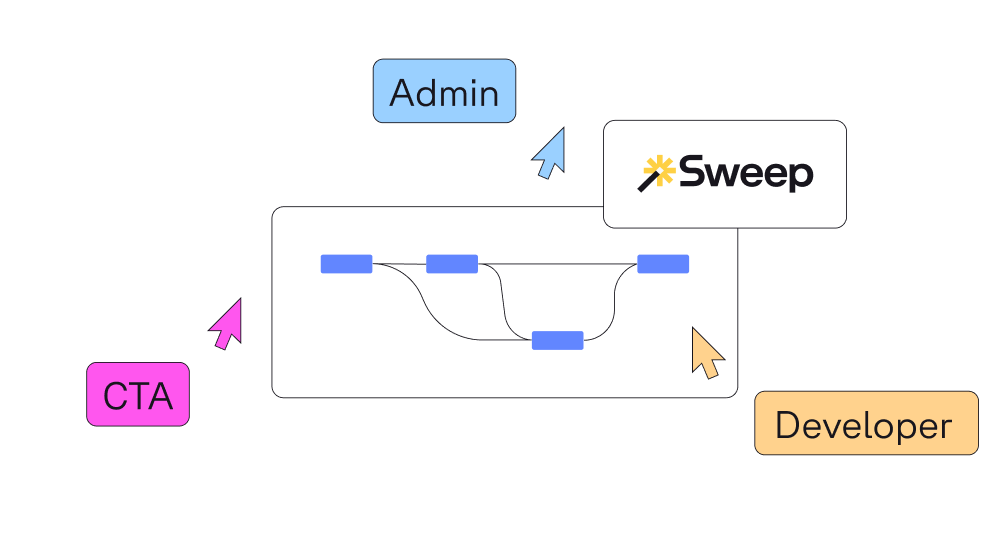
Accelerate troubleshooting and incident response

When automation breaks or data behaves unexpectedly, root cause analysis often requires hours of manual investigation across flows, Apex, and field history.

Sweep traces dependencies instantly, revealing what logic executed, what fields were modified, and where the issue originated. Teams resolve incidents faster and reduce production risk.
1

Audit Salesforce permissions and enforce governance

As organizations scale, visibility into access, ownership, and control becomes fragmented. Profiles, permission sets, field-level security, and role hierarchies intersect in ways that are difficult to audit.

Sweep’s Permissions Agent surfaces who has administrative privileges, who can modify critical objects, and where over-privileged access exists. Teams gain clarity before audits, migrations, and governance changes. Security and compliance move from reactive investigation to structured oversight.
1

Migrate, consolidate, and modernize Salesforce safely

Whether redesigning architecture, consolidating orgs after M&A, cleaning up technical debt, or modernizing automation, change introduces risk when dependencies are unclear.

Sweep provides a deterministic model of schema, automation, and code across one org or many. Teams can evaluate divergence, identify redundant logic, and execute migrations or standardization initiatives with full system awareness.
1

Prepare Salesforce for AI and advanced automation

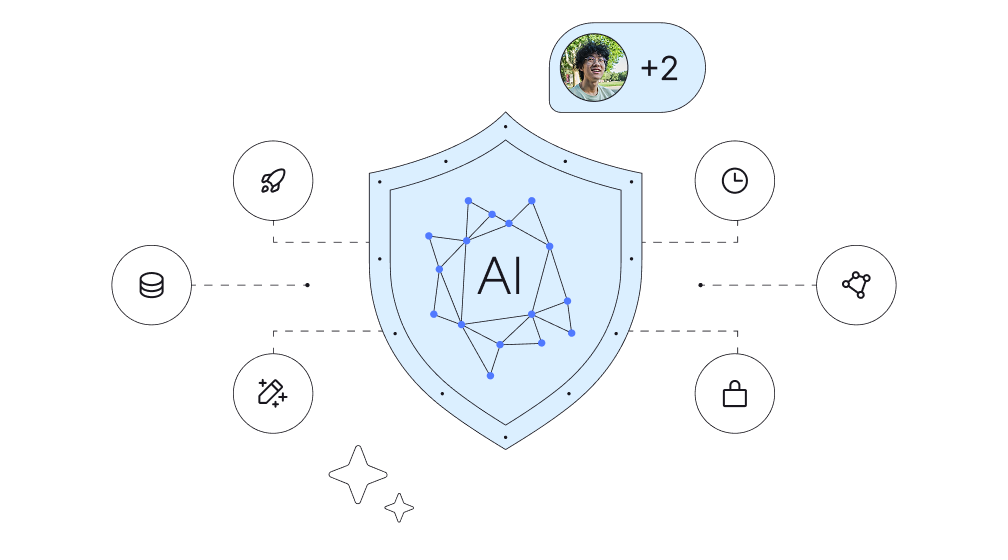
AI and advanced automation require structured, explainable system context. Most Salesforce orgs weren’t designed for that.

Sweep creates an explainable metadata model agents can safely reason over, enabling AI grounded in real system logic.

Frequently Asked Questions

Connecting Salesforce to Sweep means Sweep securely ingests your Salesforce metadata and builds a complete understanding of how your org is configured and how it behaves. This includes core components like objects, fields, flows, validation rules, and permissions, plus advanced layers like Apex, CPQ, and managed package logic. Sweep then organizes that information into a structured system model so teams can trace dependencies, understand automation, and make changes safely. Unlike static documentation tools, Sweep continuously refreshes this model so your system context stays current as Salesforce evolves. Once connected, Sweep powers AI-driven workflows like agentic documentation, natural-language Q&A, impact analysis, and proactive monitoring. Many teams also use Sweep to operationalize Salesforce through routing, alerts, and data hygiene workflows like matching and deduplication. The result is faster troubleshooting, safer deployments, and a more scalable Salesforce operating model.

Sweep supports a broad and deep set of Salesforce metadata types so teams can achieve full visibility across both declarative and programmatic layers. Sweep ingests objects, fields, record types, page layouts, validation rules, flows, and formulas. It also includes code-based components such as Apex classes, triggers, and Lightning Web Components (LWC). For enterprise complexity, Sweep extends coverage into CPQ logic and scripts, plus components introduced through managed packages. Sweep also supports critical governance layers such as profiles, permissions, and configuration settings that frequently drive hidden system behavior. To connect configuration to real-world behavior, Sweep can enrich metadata context with signals like Field History Tracking and Event Monitoring. This coverage matters because most Salesforce “documentation” solutions only capture a subset of metadata, leaving teams blind to the logic and dependencies that actually cause production risk. Sweep is designed to document and reason over the full system.

Salesforce provides useful tools like Setup search, Flow Builder, and basic audit history, but they often require manual investigation and do not provide a unified view of how components interact across your full org. Sweep is different because it builds a structured system model that connects objects, fields, automation, permissions, and code into a single dependency graph. This enables teams to understand upstream and downstream impact without stitching information together across multiple Salesforce screens. Sweep also helps teams go beyond “what is connected” by explaining why it is connected and what the change risk looks like. In addition, Sweep supports more advanced scenarios such as CPQ logic, managed package complexity, and multi-layer automation patterns that are difficult to track manually. With Sweep, teams can ask questions, simulate changes, and generate documentation automatically, which turns dependency analysis into an operational workflow instead of a one-time investigation.

Sweep improves Salesforce documentation by generating and maintaining a live, structured documentation layer directly from your org’s metadata. Instead of relying on spreadsheets, Confluence pages, or tribal knowledge, Sweep automatically documents objects, fields, automations, and dependencies in a way that stays current over time. Teams can quickly see what a field is used for, what automations reference it, and where it impacts business processes. Sweep also generates AI-powered explanations for complex configurations, such as flows or validation rules, so documentation is understandable to both technical and non-technical stakeholders. This is especially valuable for onboarding new admins, supporting cross-functional teams, and accelerating audits or cleanup projects. Because Sweep continuously syncs Salesforce metadata, documentation does not degrade into outdated snapshots. For many customers, Sweep becomes the source of truth for “how Salesforce really works,” making it easier to scale the org without accumulating unmanaged technical debt.


Dependency mapping in Salesforce is the ability to understand how metadata components relate to one another, including how objects, fields, flows, Apex, validation rules, and permissions are connected. Dependencies matter because Salesforce changes rarely happen in isolation. A “simple” update like renaming a picklist value or adjusting a field can break downstream automation, integrations, reporting, or user experience. Without dependency visibility, teams rely on manual guesswork and time-consuming audits to estimate impact. Sweep solves this by building deterministic dependency mapping across your org, showing upstream and downstream relationships so teams can evaluate risk before deploying changes. This helps prevent production incidents, reduces regression issues, and speeds up delivery. Dependency mapping is also essential for technical debt cleanup, migrations, and org optimization initiatives because it helps teams identify redundant automation, unused fields, and conflicting logic that accumulates over time as Salesforce evolves.

Yes. Sweep is often used as a foundation for Salesforce data hygiene initiatives because it clarifies which fields matter, how they are populated, and what automation affects them. In many Salesforce orgs, data quality degrades due to field bloat, inconsistent ownership, conflicting flows, and hidden automation that writes values unexpectedly. Sweep makes these patterns visible by mapping metadata dependencies and surfacing how objects and fields behave across workflows. This helps teams answer high-impact questions like which fields are unused, which automations populate them, and where values are being overwritten. With this clarity, teams can confidently simplify data models, standardize naming, remove redundant fields, and reduce conflicting logic. Sweep also supports operational data hygiene workflows such as matching and deduplication, which helps prevent duplicates and keep CRM data reliable over time. The outcome is higher-quality reporting, more trustworthy dashboards, and less time wasted troubleshooting inconsistencies.

Yes. Sweep is designed to support real-world Salesforce complexity, including CPQ logic and managed package components that many tools struggle to document or analyze. CPQ implementations often include advanced pricing rules, scripts, and configuration patterns that are difficult to trace through Salesforce UI alone. Sweep extends beyond standard metadata coverage using additional querying and parsing approaches to capture how CPQ logic interacts with fields, objects, and automation. Similarly, managed packages can introduce hidden dependencies and non-obvious configuration behavior that increases change risk. Sweep helps teams maintain visibility into these components and understand how they affect system behavior. This is important for teams operating at enterprise scale, where CPQ, billing integrations, and packaged functionality are core to GTM operations. With Sweep, Salesforce admins, architects, and RevOps teams can include CPQ and package complexity in documentation, dependency mapping, and impact analysis so they can deploy changes safely.

Operate Salesforce with clarity

The Salesforce Platform brings clarity to schema, automation, permissions, and system behavior. It provides context before configuration and impact analysis before change.