Modernize without breaking production
Whether you're migrating automation, merging Salesforce orgs post-M&A, or cleaning up years of accumulated metadata tech debt, every change carries risk you can't see. Sweep makes the invisible visible before you act.
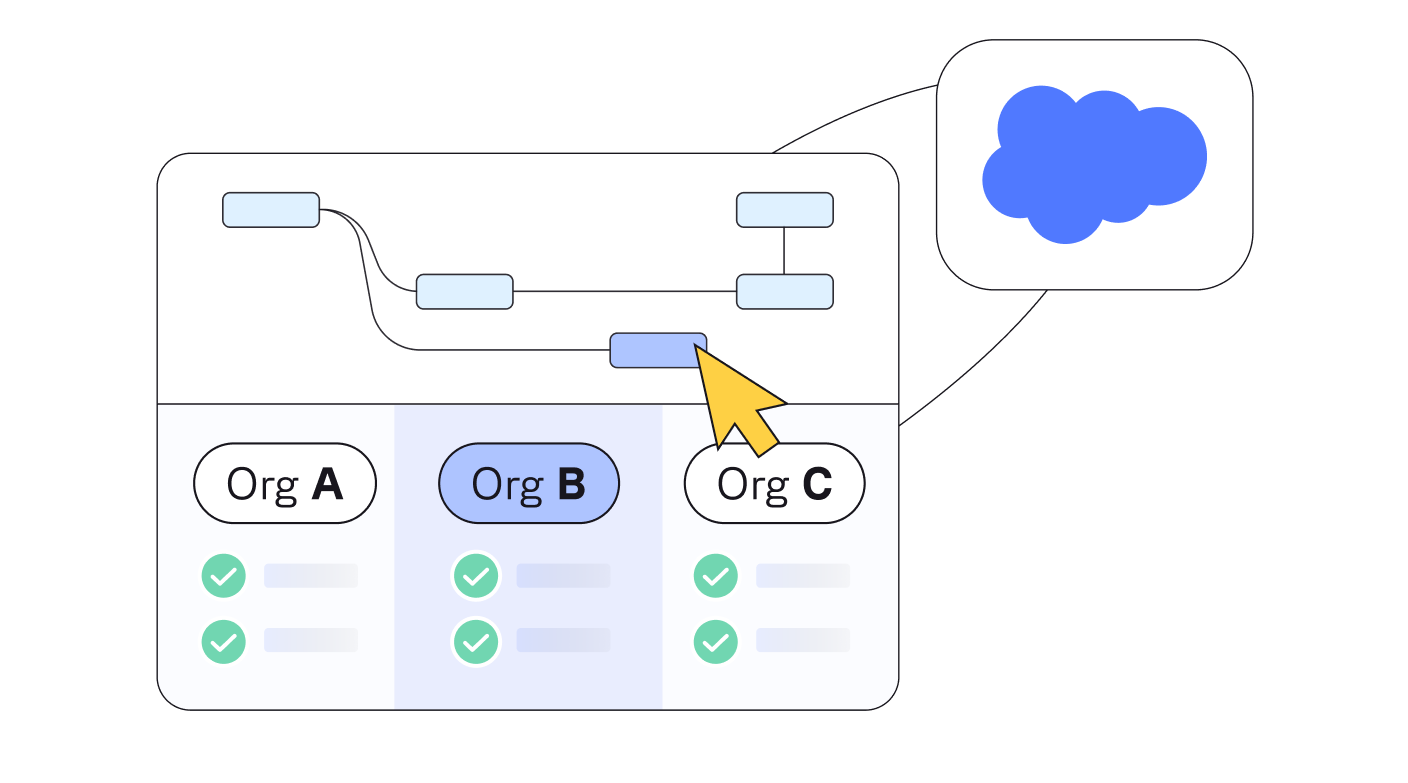
From system fragmentation to controlled modernization
Technical debt accumulates invisibly across configurations, automation layers, and integration dependencies until a deployment fails or a migration stalls. Sweep moves teams from fragmented, high-risk change management to deterministic, dependency-aware modernization.
Modernize safely
Understand how automation and metadata connect before migrating or upgrading.
Merge orgs without inheriting debt
Expose schema conflicts, overlapping automation, and structural differences across orgs.
Remove tech debt confidently
Deterministic dependency analysis shows exactly what can be removed safely.
End invisible risk. Migrate and modernize with visibility.
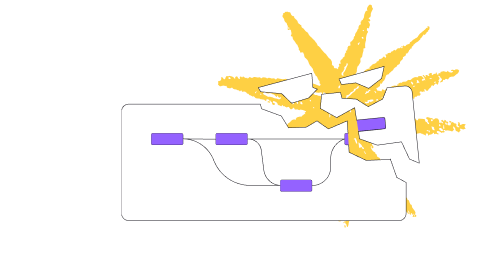
Migrate without breaking what's already working
Workflow Rules and Process Builders accumulate silently over years, triggering in sequences no one fully remembers. Most migration projects only discover their real scope after something breaks.
Sweep maps your automation landscape so you can:
- Document your CPQ configuration before migrating to Agentforce Revenue Management (formerly RCA) - every pricing rule, product rule, and dependency mapped before you touch the new environment
- See every Workflow Rule and Process Builder with full execution paths
- Identify automation chains and trigger sequences across objects
- Detect redundant automations firing on the same records
- Understand field dependencies before removing automation
- Catch conflicts between legacy automation and new Flows before go-live
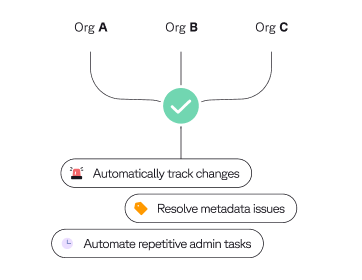
Merge Salesforce orgs, without inheriting their problems
Merging Salesforce orgs after an acquisition is one of the highest-risk operations in enterprise Salesforce management. Teams often underestimate scope and discover conflicts mid-migration.
With Multi-Org Mode, Sweep exposes:
- Schema differences and data model conflicts between orgs
- Automation overlap and configuration conflicts across environments
- Upstream and downstream metadata relationships across both instances
- Technical debt in the acquired org that would transfer into your environment
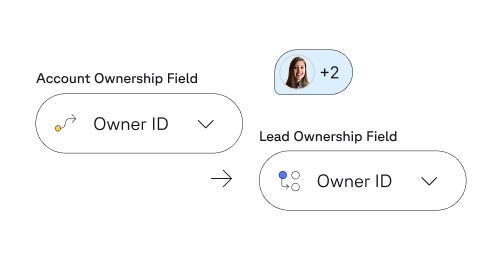
Know what's safe to remove - tech debt reduction you can trust
Most technical debt is invisible until it causes a problem. Fields appear unused but feed integrations. Automation seems redundant but triggers edge cases. Native tooling shows what exists, not what depends on it.
Sweep continuously maps your architecture and surfaces:
- Unused fields, objects, and automations with zero active references
- Redundant configurations accumulated from years of changes
- Hidden dependencies between components
- Governance violations and permission inconsistencies
- Prioritized remediation plans ranked by risk and impact
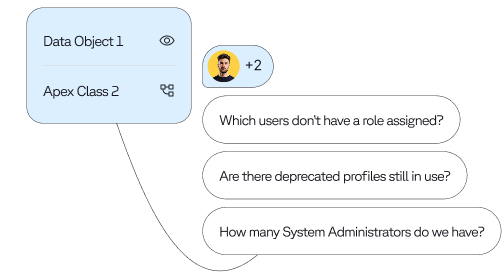
Know the impact of every change before you make it
In tech-debt-heavy Salesforce environments, deployments become high-risk events because hidden dependencies create unexpected consequences. Organizations with high technical debt run release cycles 3–5× longer than well-maintained environments, and operational costs run 40% higher as a result.
Sweep maps your dependency graph so teams can see:
- Impact analysis across Salesforce metadata before any change is made
- Hardcoded logic and hidden dependencies that evade standard tooling
- Automation conflicts that would surface only after deployment
- Downstream components affected by a single field or configuration change
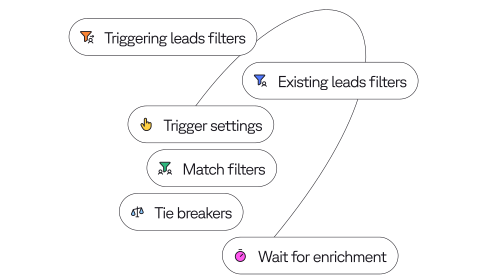
Modernize incrementally, without risk of reimplementation
With every Salesforce release, legacy architectures drift further from platform best practices. Eventually modernization becomes unavoidable.
Sweep identifies modernization debt including:
- Deprecated API usage scheduled for retirement
- Visualforce pages still running where Lightning equivalents exist
- Hardcoded IDs, endpoints, and business logic embedded in Apex
- Test coverage that meets thresholds but fails to protect against regressions
- Legacy patterns blocking adoption of modern Salesforce features
Instead of a risky big-bang rewrite, teams get a prioritized modernization roadmap grounded in the real system state. Refactor incrementally, retire safely, and preserve institutional knowledge.
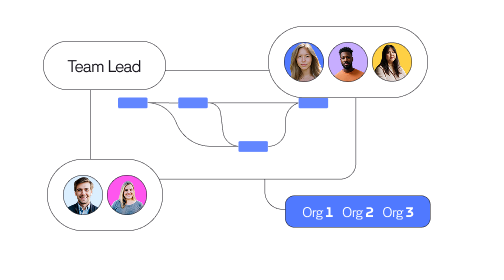
Get cross-system visibility, without manual mapping
When data crosses system boundaries, governance context is often lost. And when something breaks, root-cause analysis becomes a manual maze.
Sweep automatically maps your cross-system integration landscape, revealing:
- Data flows across Salesforce, Snowflake, and connected systems
- Which external platforms produce or consume specific fields and objects
- Integration dependencies that would break if a field changes
- Where governance context disappears between systems
Before any migration, Salesforce org consolidation, or field change, teams can see exactly what depends on what, across every system boundary.
How it works
Connect your system
Sweep securely indexes your metadata into the Unified Metadata Graph, including configurations, automations, permissions, and relationships.
Contextualize automatically
Deterministic parsing traces logic across Salesforce metadata types, surfacing every dependency before you touch a thing.
Reason with Agents
Leverage Metadata Agents to get a prioritized inventory of technical debt, categorized by type, severity, and downstream impact.
Customer stories

Challenge:
Rebuy’s RevOps team was losing more than 20 hours per week to troubleshooting automation, answering field questions, and manually investigating reporting discrepancies in a high-volume Salesforce + Data Cloud environment. Documentation was fragmented, automation was complex, and incidents required deep manual digging.
Implementation:
Sweep became their real-time documentation and discovery layer, tracing automation paths, explaining metadata, and enabling self-serve support across the organization.
Results:
- 20+ hours/week reclaimed
- 50% faster incident resolution
- 95% fewer support tickets
“The AI-powered documentation is the fundamental thing that sets Sweep apart… What would have taken one or two days now takes about 15 minutes.”



Challenge:
Augury’s Salesforce environment had evolved over years of customization, complex flows, and lost tribal knowledge. Investigations that should have taken minutes stretched into days or weeks, slowing both Admin and RevOps delivery.
Implementation:
Sweep became their always-available metadata intelligence layer — documenting configuration, mapping dependencies, and surfacing impact before changes were made.
Results:
- 50% faster project delivery (14 → 7 days)
- 67% faster incident resolution
- 15–25 hours/week reclaimed
“Sweep is an almost omnipotent, omniscient being living in your Salesforce, giving you all the answers instantly. Projects always had this investigative phase that took several days. Now that's essentially gone."



Challenge:
As Brex scaled, answering basic metadata questions was consuming up to half the team's week. Manual documentation couldn’t keep up, and impact analysis was slow and risky.
Implementation:
Sweep provided structured, AI-powered documentation grounded in live metadata, enabling fast answers, safer cleanup, and confident change management.
Results:
- 70–90% faster time-to-answer
- Significant reduction in investigation overhead
- Standardized data models
“Raise The Grade required us to deeply understand how our data was being generated and maintained and Sweep’s Documentation Agent made that possible. We've been able to get answers to questions 70–90% faster and I'd argue 90% is low in many cases.”



Challenge:
At SailPoint, a Sales Stage standardization initiative spanning 23+ stages across four Opportunity record types in a 20-year-old org was delivered on schedule with zero post-deployment failures.
Implementation:
What had previously required manual inspection of every validation rule and flow now took minutes.
Results:
- IImpact analysis accelerated 15x
- 750+ hours of Salesforce capacity reclaimed annually
- Zero post-deployment remediation
"There's no way we could have done this project without Sweep."


Ready to see your org clearly?
See the dependencies, risks, and technical debt hidden across your Salesforce environment.
Get a live walkthrough of Sweep and understand exactly what’s safe to change before your next migration or cleanup.