
Permission drift used to be housekeeping debt. Agentforce just turned it into a live security exposure.
*****
New research from Snyk this month put a number on something security teams have felt for a while: they have visibility into roughly 33% of their organization's actual AI footprint.
Over the same six months, agentic architecture adoption bounced from 28% to 33%.
Smash those two lines together and the problem states itself: adoption is accelerating and visibility isn't.
Teams are, in a very real way, outrunning their headlights.
And, in fact, 33% may be the generous version.
Even that number is optimistic. In the field it was closer to 10–15%… and only at public companies with reporting standards forcing the question. When security teams finally started asking, most were so new to it they couldnt separate metadata and structure from data and records. That distinction is the whole ballgame.
It's the whole ballgame, indeed…. because agents don't just read.
They act.
Permission drift is what happens when access outlives its reason. A temporary elevation granted "just for this sprint" never gets pulled back. A role built for one job eventually morphs into a template for five others. A departed employee's permission set lingers, then gets inherited by the next hire.
Over-provisioned access (Modify All Data, View All Data, Delete rights) spreads because revoking it is riskier than leaving it alone.
In a vacuum, each of these is ordinary org housekeeping: the kind of debt every decent Salesforce admin on earth knows and most access reviews miss. Permission drift is a slow, invisible, gradual building-up of that debt across profiles, permission sets, and users until nobody can answer who can do what, and why.
For years, drift was a governance annoyance. The reason it's now a security headline is simple: you can point an autonomous agent at the same org.
When you do, the agent inherits every permission humans never scoped — and it exercises them at machine speed, without the hesitation a person brings to "wait, should I actually be able to do this?" An agent doesn't know that the Delete right it inherited was a workaround from 2023. It just has it, and it will use it if a task calls for it.
"An agent just inherited a departed user's permissions — what happens next?" is no longer a thought experiment. In a production Agentforce org, it's a Tuesday.
The reflex is to file this under shadow IT and reach for the familiar playbook. That underestimates it.
Shadow AI is worse. With shadow IT, the risk was mostly about location... where is our data being stored, shared, accessed? Contain the data, contain the problem. Shadow AI breaks that model. Now you have to understand three things about every agent: what it can access, what permissions it actually holds, and what it can do... create, modify, delete. And not just records. Metadata too.
That last point is the escalation. The risk isn't only what an agent can read — it's what it can change: fields, flows, permission sets, the scaffolding of the org itself. A misplaced file is a data problem you can contain. An agent quietly rewriting the structure of your org is a different category of threat, and it's the one the shadow-IT playbook has no page for.
Agentforce is live in production orgs today. That's what moves permission inheritance from an abstract "AI risk" slide into a concrete exposure you already have. The agents are already operating inside the access you've accumulated over years — you just haven't had a way to see the shape of it.
It also lands at exactly the moment security and compliance functions are being asked about agents in earnest. SOX and SOC 2 reviewers who never touched Salesforce internals are suddenly asking what an agent can reach and what it can change. "We ran a cleanup last year" is not an answer to a control that has to hold continuously.
You can't govern what you can't see. And by the numbers, most teams can't see the two-thirds that actually breaks things.
Here's the trap: treat this as a one-time audit, sweep the org, declare victory. Drift doesn't work that way. Access keeps accumulating the moment the audit ends, so a point-in-time cleanup is stale before the quarter closes. The durable posture is continuous visibility and remediation — seeing access as it changes, not photographing it once.
A practical version of that motion looks like this:
This is where Sweep fits, and it's worth being precise about how: Sweep isn't a security product. It's the live context layer that makes these questions answerable in the first place. The Permissions Agent gives admins, security, and compliance teams a conversational way to interrogate Salesforce access — profiles, permission sets, user access, licenses, and sensitive permissions — and surfaces where over-provisioning creates risk, why an access path exists, and where it no longer should. It reads from live metadata rather than a point-in-time export, and it returns audit-ready answers instead of another spreadsheet to reconcile. With Playbooks, that whole investigation collapses into a single prompted motion you can run continuously, not only once a quarter.
The shift is simple to say and hard to do without the right layer: stop trying to clean the org up before the agents arrive, and start keeping it visible while they work.
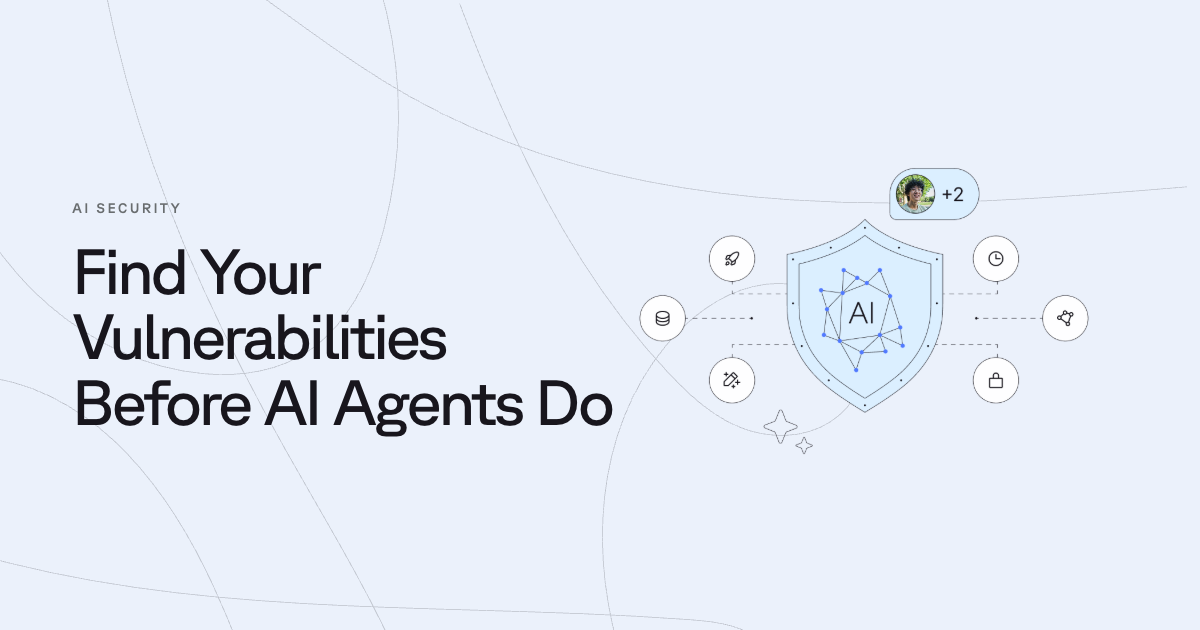
Permission drift is measurable. The teams who come out ahead over the next twelve months are the ones who make measuring it continuous… and who find their vulnerabilities before their agents do.