Know what will break before you change it
Sweep’s agentic layer maps every dependency across your org, so you can analyze impact, understand system behavior, and deploy changes without breaking what already works.
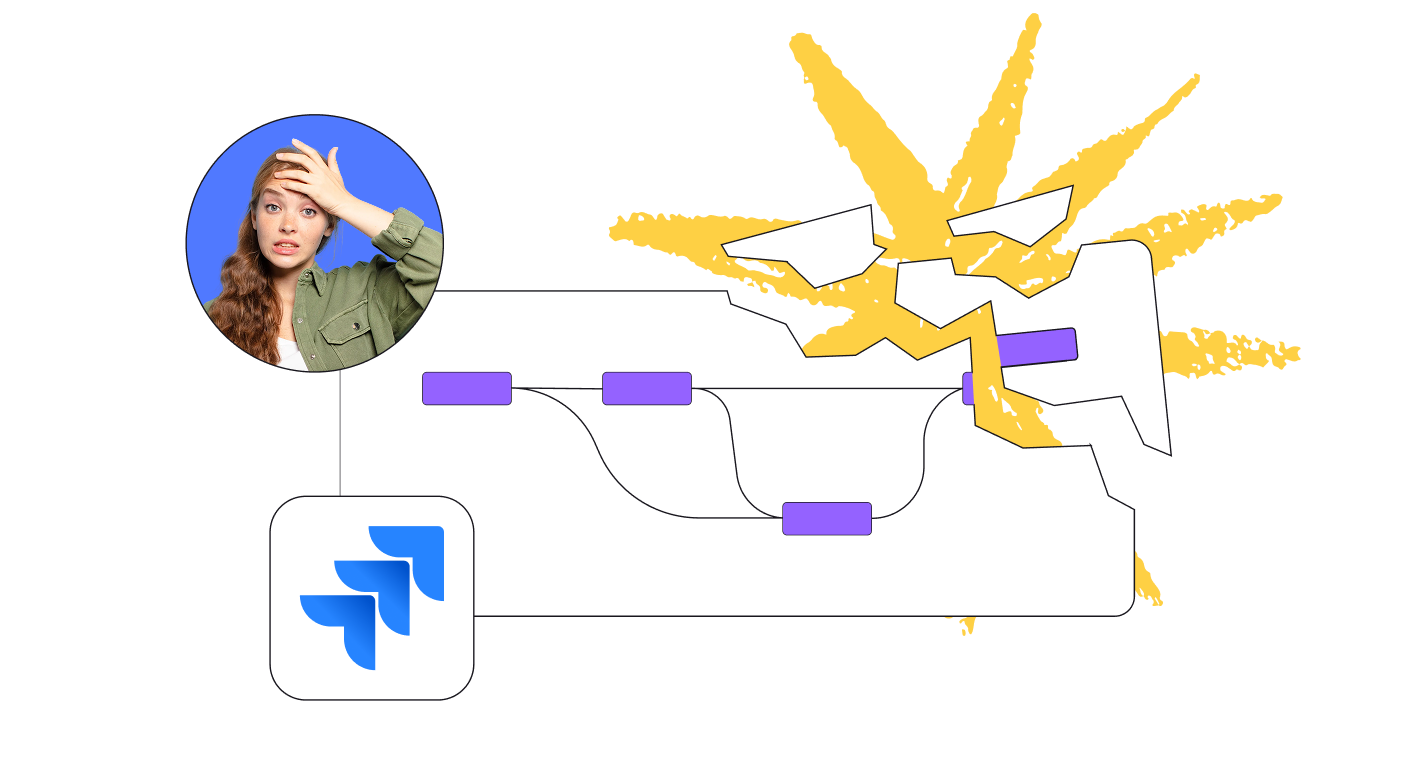
Understand every dependency in your system
Salesforce environments evolve for years. New fields, automations, and integrations accumulate across teams and projects.
Over time, dependencies spread across metadata, automation, and external systems. That’s why even small configuration updates can require hours of investigation before deploying.
Limited visibility into dependencies
Fields and objects are referenced across flows, Apex, validation rules, reports, and integrations, but Salesforce exposes these relationships one screen at a time.
Can’t predict what a change will break
Even small configuration updates can trigger automation, integrations, and downstream logic that are difficult to detect before deployment.
Hard to understand system behavior
Years of configuration changes leave many orgs with undocumented automation and logic that must be manually investigated before making changes.
How admins and architects use Sweep
Sweep helps Salesforce teams answer the questions that typically require hours of manual investigation.
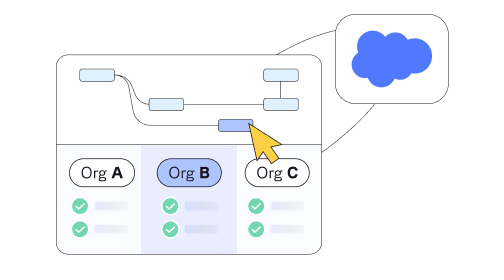
Understand where configuration is used
Salesforce components are deeply interconnected. Fields and objects can Salesforce components are deeply interconnected. Fields and objects can appear across flows, validation rules, reports, Apex, and integrations, making it difficult to understand where configuration is referenced.
Sweep maps these relationships across the org so teams can quickly see where metadata is used before modifying it.
Teams can:
- Identify where fields and objects are referenced across automation and reporting
- Surface dependencies across Flow, Apex, validation rules, and integrations
- Understand how configuration elements connect across the org
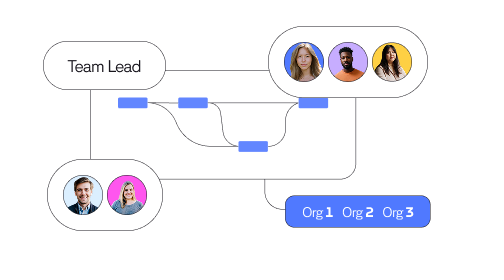
Trace impact before anything hits production
Configuration updates often trigger automation, integrations, and downstream logic that are difficult to anticipate.
Sweep evaluates metadata relationships across the system so teams can understand what a change will affect before it reaches production.
Before deploying a change, teams can:
- Identify automation triggered by configuration updates
- Detect downstream dependencies across flows, Apex, and integrations
- Assess deployment risk before releasing changes
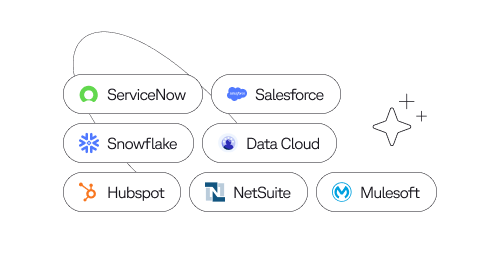
Uncover automation behavior across the system
Record updates frequently trigger multiple layers of automation across Flow, Apex, and legacy processes.
Sweep exposes the full automation chain so teams can understand what logic executes and in what order.
This makes it possible to:
- Follow the automation path triggered by a record update
- See which automation modifies specific fields or records
- Understand how updates propagate through system logic
Resolve production issues faster
When system behavior changes unexpectedly, identifying the root cause can require hours of digging through metadata. Sweep exposes the relationships between system components so teams can trace failures back to their source.
When troubleshooting incidents, teams can:
- Identify the automation or configuration responsible for unexpected behavior
- Trace record updates across automation paths
- Investigate incidents without manually navigating Setup
Understand inherited systems faster
Many admins inherit Salesforce environments built over years by different teams and consultants. Sweep provides a structured view of objects, automation, and dependencies so admins can quickly understand how the system is organized.
This control layer helps admins:
- Explore relationships across objects, fields, and automation
- See how different parts of the system interact
- Understand architecture without relying on tribal knowledge
Identify technical debt with full dependency context
Large Salesforce environments often accumulate unused fields, outdated automation, and redundant configuration over time.
Sweep surfaces these components so teams can safely clean up legacy configuration.
During cleanup efforts, admins can:
- Detect unused fields and obsolete automation
- Identify overlapping logic across flows and Apex
- Prioritize cleanup based on actual dependencies
How it works
Connect your system
Sweep continuously ingests metadata from Salesforce and adjacent platforms into a unified metadata graph.
Contextualize automatically
Dependencies, automation logic, and relationships are mapped into a shared enterprise model.
Reason with Agents
Teams and AI agents can analyze system behavior, evaluate change impact, and plan modernization initiatives safely.
Customer stories

Challenge:
SailPoint needed to modernize its Salesforce revenue architecture while navigating a complex operational moment: a new ERP rollout, strict SOX compliance requirements, and preparations for IPO readiness.
Implementation:
Using Sweep’s Agentic Layer, SailPoint gained a complete understanding of how configuration, automation, and dependencies interacted across its Salesforce environment. The team could trace every dependency tied to Sales Stages, validate downstream impact, and confidently deploy structural changes.
Results:
- 15× faster impact analysis
- 750+ hours of Salesforce capacity reclaimed annually
- Zero forecasting disruption during rollout
“There’s no way we could have done this project without Sweep.”



Challenge:
Augury’s Salesforce environment had evolved over years of customization, complex flows, and lost tribal knowledge. Investigations that should have taken minutes stretched into days or weeks, slowing both Admin and RevOps delivery.
Implementation:
Sweep became their always-available metadata intelligence layer — documenting configuration, mapping dependencies, and surfacing impact before changes were made.
Results:
- 50% faster project delivery (14 → 7 days)
- 67% faster incident resolution
- 15–25 hours/week reclaimed
“Sweep is an almost omnipotent, omniscient being living in your Salesforce, giving you all the answers instantly. Projects always had this investigative phase that took several days. Now that's essentially gone."


Ready to turn system complexity into competitive advantage?
Sweep gives leaders the capabilities required to modernize systems safely, scale AI initiatives, and unlock the full value of their technology investments.