See your system the way it actually works
Instead of static documentation, tribal knowledge, and endless setup clicks, Sweep delivers a continuously updated, explainable representation of your architecture grounded in your metadata.
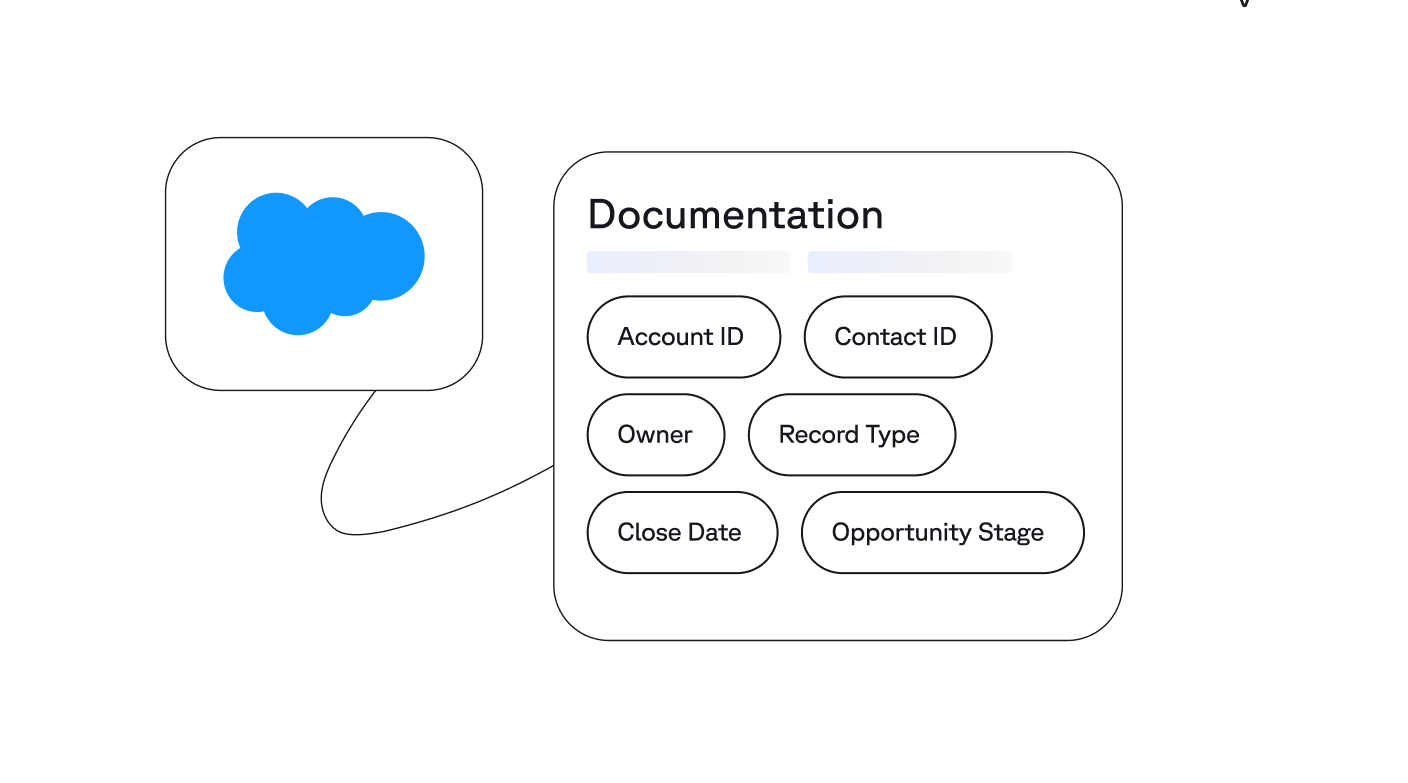
From fragmented knowledge to a living map of your architecture
Sweep provides a continuously updated Agentic Layer for enterprise systems, creating a
new standard for Salesforce AI Documentation grounded in your metadata.
Turn metadata into living system knowledge
Replace manual diagrams and tribal knowledge with AI-powered documentation derived from your metadata. Get a real-time view of objects and fields, automation logic, and dependencies.
Understand complex environments in minutes
Inherited orgs often require weeks of reverse engineering. Quickly understand how the system is structured, how automation interacts, and where hidden complexity creates risk.
See what breaks before It breaks
By mapping dependencies across your architecture, you can anticipate downstream impact before deployment — reducing disruption, and enabling confident, large-scale transformation.
Go from guesswork to agentic-powered clarity
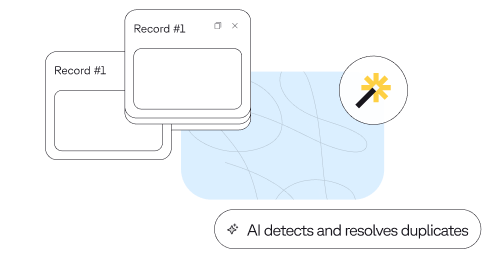
Keep documentation always current without manual effort
Most documentation is outdated the moment it’s written. Sweep generates structured documentation directly from metadata, so it updates as your architecture evolves.
- Continuously updated documentation for objects, fields, automations, and more
- Clear ownership and usage context
- Teams commonly see 70–90% faster time-to-answer
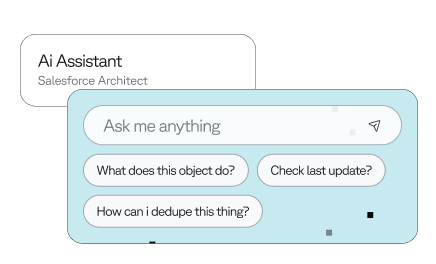
Step into an inherited org with instant context
Inheriting an org shouldn’t require weeks of reverse engineering. Sweep traces how data moves, what logic executes, and where business rules live, without manually clicking through setup screens:
- Object relationships and schema structure
- Automation chains and execution paths
- Field usage and dependency mapping
- Permission and configuration layers
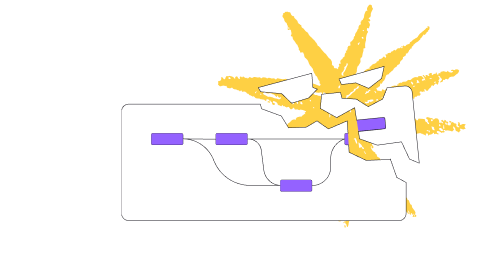
Trace the root cause of breakage in minutes
When data behaves unexpectedly or automation misfires, root cause analysis becomes a manual maze. Sweep makes troubleshooting traceable:
- Gain a clear view of dependencies
- Understand where logic executed
- Customers report 50-70% faster incident resolution
Document CPQ complexity before migrating
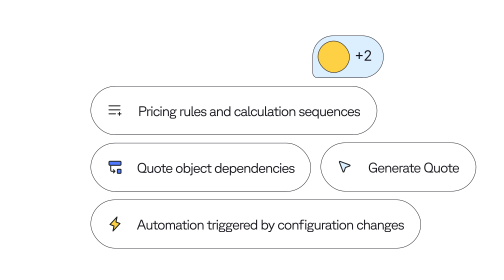
CPQ environments introduce layered pricing logic, scripts, validation rules, and cross-object automation that are difficult to untangle. If you’re planning a Salesforce CPQ to Revenue Cloud migration, having up-to-date CPQ documentation is the first critical step. Sweep parses CPQ metadata:
- Pricing rules and calculation sequences
- Quote object dependencies
- Automation triggered by configuration changes
- Cross-object field references
Get new team members onboarded faster
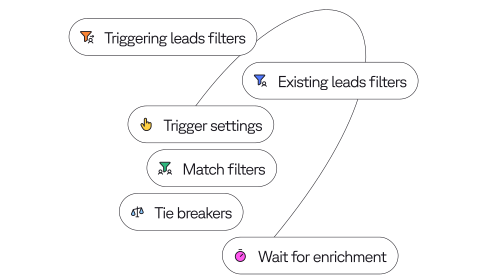
Onboarding typically depends on tribal knowledge. Sweep turns your system into an explorable Agentic Layer:
- Ask natural-language questions about how automation works
- Instantly understand field purpose and dependencies
- Generate structured documentation artifacts
- Share visual system maps in the Visual Workspace
Make changes with full system awareness
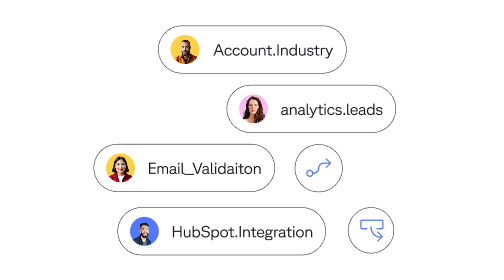
Changes rarely happen in isolation. A field update can cascade into automation, integrations, reporting logic, and downstream Salesforce orgs or other platforms. With Multi-Org Mode, Sweep extends dependency mapping across systems and orgs to expose:
- Upstream and downstream metadata relationships
- Cross-platform automation dependencies
- Multi-org divergence and overlap
- System-wide impact before deployment
How it works
Connect your system
Sweep securely indexes metadata into the Unified Metadata Graph.
Contextualize automatically
Deterministic parsing maps logic, dependencies, and relationships.
Reason with Agents
Generate explanations, artifacts, and impact analysis grounded in your metadata.
Customer stories

Challenge:
Rebuy’s RevOps team was losing more than 20 hours per week to troubleshooting automation, answering field questions, and manually investigating reporting discrepancies in a high-volume Salesforce + Data Cloud environment. Documentation was fragmented, automation was complex, and incidents required deep manual digging.
Implementation:
Sweep became their real-time documentation and discovery layer, tracing automation paths, explaining metadata, and enabling self-serve support across the organization.
Results:
- 20+ hours/week reclaimed
- 50% faster incident resolution
- 95% fewer support tickets
“The AI-powered documentation is the fundamental thing that sets Sweep apart… What would have taken one or two days now takes about 15 minutes.”



Challenge:
Augury’s Salesforce environment had evolved over years of customization, complex flows, and lost tribal knowledge. Investigations that should have taken minutes stretched into days or weeks, slowing both Admin and RevOps delivery.
Implementation:
Sweep became their always-available metadata intelligence layer — documenting configuration, mapping dependencies, and surfacing impact before changes were made.
Results:
- 50% faster project delivery (14 → 7 days)
- 67% faster incident resolution
- 15–25 hours/week reclaimed
“Sweep is an almost omnipotent, omniscient being living in your Salesforce, giving you all the answers instantly. Projects always had this investigative phase that took several days. Now that's essentially gone."



Challenge:
As Brex scaled, answering basic metadata questions was consuming up to half the team's week. Manual documentation couldn’t keep up, and impact analysis was slow and risky.
Implementation:
Sweep provided structured, AI-powered documentation grounded in live metadata, enabling fast answers, safer cleanup, and confident change management.
Results:
- 70–90% faster time-to-answer
- Significant reduction in investigation overhead
- Standardized data models
“Raise The Grade required us to deeply understand how our data was being generated and maintained and Sweep’s Documentation Agent made that possible. We've been able to get answers to questions 70–90% faster and I'd argue 90% is low in many cases.”



Challenge:
At SailPoint, a Sales Stage standardization initiative spanning 23+ stages across four Opportunity record types in a 20-year-old org was delivered on schedule with zero post-deployment failures.
Implementation:
What had previously required manual inspection of every validation rule and flow now took minutes.
Results:
- Impact analysis accelerated 15x
- 750+ hours of Salesforce capacity reclaimed annually
- Zero post-deployment remediation
"There's no way we could have done this project without Sweep."


Ready to stop reverse-engineering your own system?
No more wiki archaeology. Just deterministic system knowledge, grounded in your metadata.