
Most enterprise systems fail because over time, no one can see the system clearly anymore. Growth means complexity. Complexity buries risk. Risk is missed, and then the odds play themselves out accordingly.
That might feel a little differently at the ground level.
Changes that used to be routine start to feel risky. A simple request — “can we tweak this field?” — turns into weeks of meetings, Slack threads, and caveats.
AI has been introduced to "speed things up," but instead it introduces a new layer of anxiety.
And every supposedly small update seems to ripple outward, breaking things no one remembered were connected.
This is a visibility problem.
And it’s the exact problem context graphs are designed to solve.
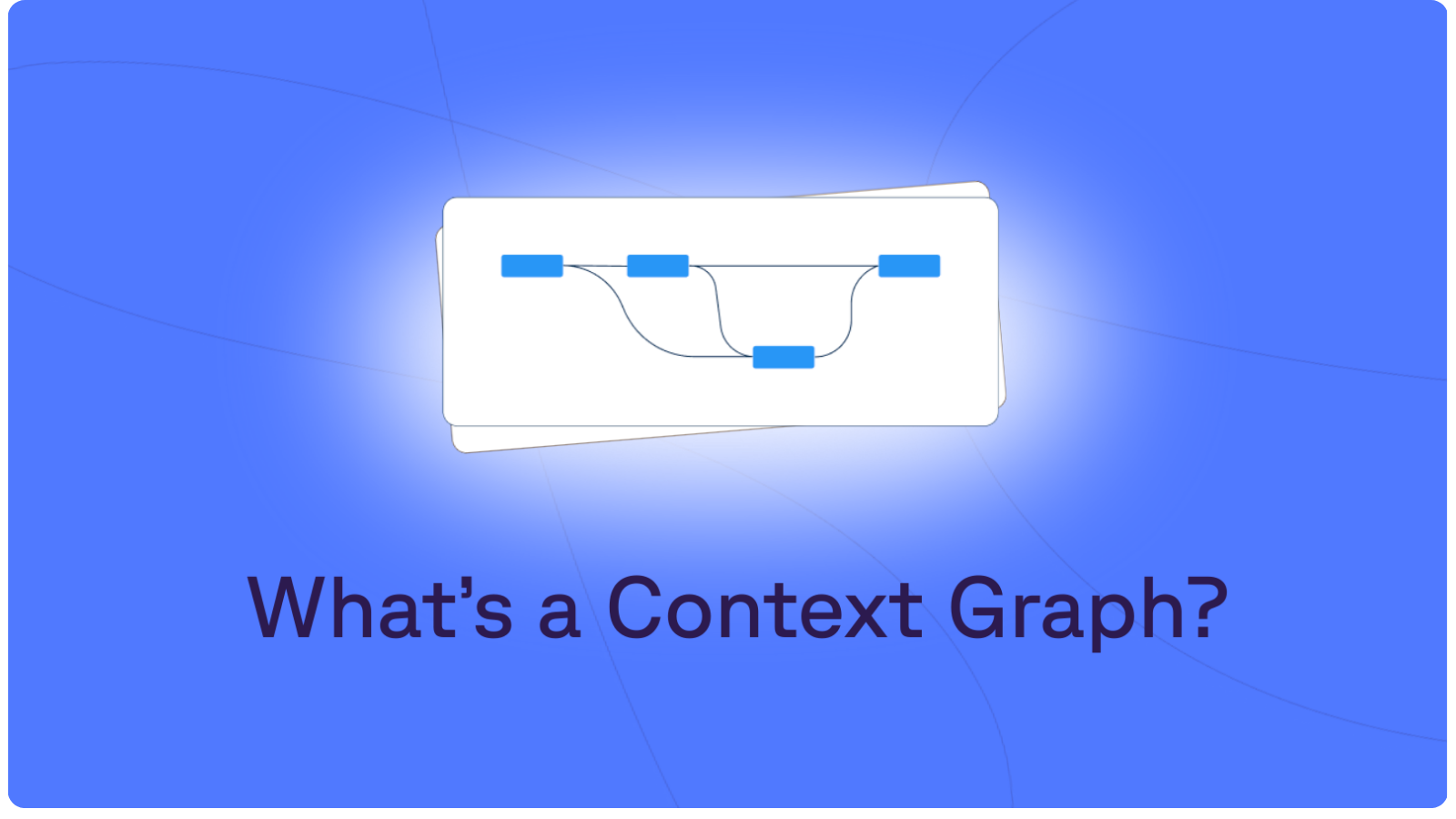
At its simplest, a context graph is a living map of how your system actually works.
Not how it was originally designed.
Not how it's documented in a wiki.
Not how people think it works based on memory and habit.
How it works right now. And right now. And right now.
A context graph models the system as it truly exists in production, capturing the real components and the real relationships between them.
The "nodes" in the graph represent concrete system elements — fields, objects, automations, permissions, integrations, and even users. The "edges" represent how those elements interact: what depends on what, what triggers what, what writes data, what governs access, and what exposes information downstream.
What makes a context graph fundamentally different from a diagram or a spreadsheet is that it captures behavior and dependency, not just structure. It doesn't only show that two things exist... it shows how they affect each other when something changes.
That’s why a context graph can answer the kinds of questions teams actually worry about, but rarely have reliable answers to. Questions like: if we change this field, what breaks? Where does this logic really live? Who or what relies on this automation downstream? Which unused fields are actually very critical? And where do our data paths create hidden risk or compliance exposure?
These aren't academic questions. They're operational ones — the questions that determine whether teams move quickly with confidence or slowly with fear.
Most organizations don’t ignore complexity on purpose. They try to manage it with the tools they have.
Spreadsheets catalog fields and objects. Static diagrams attempt to explain flows. Confluence pages document intent. Long-tenured team members become walking encyclopedias of institutional knowledge. And when all else fails, the unspoken rule becomes: "well... just be careful."
For a while, this works.
But most enterprise systems — especially platforms like Salesforce — have crossed a threshold where these approaches stop scaling. Business logic is no longer centralized; it’s distributed across flows, Apex, validation rules, integrations, and third-party tools.
Ownership is fragmented across admins, RevOps, engineering, consultants, and business teams. Changes happen continuously, not in neat release cycles. And AI and automation accelerate decisions faster than humans can manually reason about their consequences.
At that point, linear thinking breaks down.
You can’t safely reason about a system one object or one flow at a time anymore. The risk isn’t in any single change — it’s in the interactions between changes. Without a way to understand relationships and downstream impact, teams either slow to a crawl or move fast and hope nothing explodes.
That gap — between what teams need to know and what they can realistically keep in their heads — is the gap context graphs fill.
A real context graph isn’t built for aesthetics. It’s not there to impress stakeholders with a pretty visualization. It’s infrastructure — the kind that quietly changes how decisions get made.
With a context graph in place, impact analysis stops being a guessing game. Before shipping a change, teams can see downstream effects across fields, flows, automations, and integrations — not just locally, but across the system as a whole. The question shifts from “will this probably be fine?” to “we can see exactly what this touches.”
That shared visibility also changes how teams work together. Admins, RevOps, engineers, and leadership are no longer arguing from screenshots, tribal knowledge, or partial views. They’re looking at the same underlying map, grounded in the same reality. Alignment becomes faster because disagreement is resolved with evidence, not opinions.
Documentation improves as well — not because people suddenly love writing docs, but because the documentation is generated from the graph itself. When documentation is derived from the system’s actual behavior, it stays current by default. The familiar disclaimer — “this might be outdated” — disappears.
Perhaps most importantly, risk stops hiding. Fragile automations, over-permissioned data paths, legacy dependencies no one remembered — all of these become visible once relationships are explicit. What was previously implicit and assumed becomes inspectable.
And this is where AI enters the picture in a more serious way. AI agents can only act responsibly if they understand the system they’re operating inside. Without context, they hallucinate, overreach, or optimize locally while breaking things globally. A context graph gives AI system-level understanding — the guardrails required for speed without chaos.
Sweep exists to make context graphs real — and usable — for Salesforce teams.
Sweep builds and maintains a living context graph of Salesforce by continuously analyzing metadata and usage patterns. Instead of treating metadata as static configuration, Sweep treats it as a record of system behavior: what exists, how it connects, and how it’s actually used.
That living graph is what powers Sweep’s core capabilities. It enables true change impact analysis across Salesforce, surfaces hidden dependencies and risk, and generates accurate, system-level documentation that teams can trust. It also underpins Sweep’s Interactive Artifacts, which let teams explore and reason about their system together, rather than in isolation.
Just as importantly, it enables safe, human-in-the-loop and agent-assisted building. Sweep doesn’t ask teams to trust automation blindly. It gives both humans and AI the context they need to act responsibly.
In short, Sweep doesn’t just draw the map. It keeps the map current — and makes it something teams can actually use.
Salesforce stopped being “just a CRM” a long, long time ago. For most organizations, it’s now the operating system for go-to-market: routing, scoring, forecasting, compensation logic, compliance, and reporting all live inside it.
That reality has consequences. Business logic lives everywhere. "Small" changes rarely stay small. Risk accumulates quietly, often invisible until something breaks. And speed without context becomes genuinely dangerous.
A context graph changes the relationship teams have with Salesforce. It turns a fragile web of assumptions into a system you can reason about. It replaces fear-based change management — the instinct to avoid touching anything — with evidence-based decision making.
Teams move faster not because they’re reckless, but because they understand the terrain.
If you remember nothing else, remember this:
Metadata is the raw material.
A context graph is the system map.
Sweep keeps the map accurate, explorable, and actionable. Or, more bluntly: context graphs make complexity legible. Sweep makes them operational.
Context graphs aren’t a buzzword. They’re a response to reality.
Once systems reach a certain level of complexity, context becomes the limiting factor — for humans and for AI. Teams that invest in understanding relationships move faster and safer over time. Teams that don’t still slow down — just with more stress, more rework, and more risk.
If your Salesforce org feels harder to change than it should, the problem is missing context.
And that’s exactly what context graphs are for.